
OpenAI chief scientist Jakub Pachocki published a post on the company's website on November 22, disclosing for the first time the pre-training perplexity of OpenAI's successive models. He proposed turning the metric into a yardstick shared across labs, and drawing a line on it: nobody crosses it until monitoring capabilities reach a certain condition.
The numbers OpenAI released
Perplexity measures how accurately a model predicts the next token on average; the lower the value, the better the prediction. What the industry actually tracks is its logarithm, also known as cross-entropy loss. Pachocki said OpenAI has tracked this number on a held-out dataset for years, and that the readings published this time come from a fixed snapshot of the company's internal codebase.
The milestones given in the post:
- GPT-3.5 sits at about 0.99. It could hold a fluent conversation and was the foundation of the original ChatGPT.
- GPT-4 sits at about 0.91. It could make effective use of chain-of-thought reasoning, which is where the later reasoning models came from.
- Below 0.8, capabilities he called "transformative" appeared in cybersecurity and mathematics.
- A model at about 0.76 began producing results on unsolved math problems one after another.
He stressed that nobody knew in advance at which reading these capabilities would emerge. A footnote in the post also says the loss curve visibly steepened in 2026. He attributes this mainly to long-term research and compute investment, with automation accounting for only a small part; in the most recent models, he writes, AI has already contributed substantial design work.
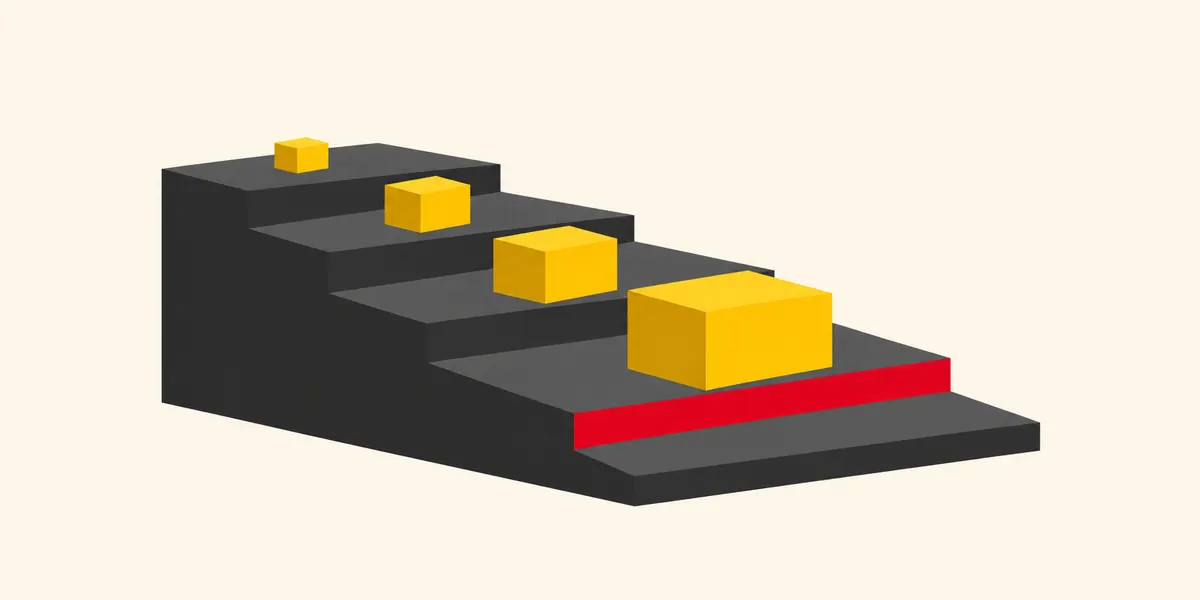
The worry: AI taking part in pre-training research
Pachocki argues that outside discussion of AI self-improvement fixates on a "fully automated researcher" and misses a nearer milestone: AI taking part in pre-training algorithm research. OpenAI has already seen one sudden jump in mathematics, and from that he extrapolates that deep-learning research could see a similar situation, as early as 2027.
I think that progress is unlikely to be fast enough to allow the full potential acceleration in pretraining.
By his extrapolation, when perplexity enters the 0.68 to 0.70 range, another batch of transformative capabilities will appear. He said he does not know which ones, and existing tests may not cover them. Over the same period, the alignment auditing methods now in common use are expected to fail further, as models become more aware that they are being evaluated and trained.
Set the line first, then discuss the conditions for crossing it
The proposal has two layers. The first is for frontier labs to build shared norms: how such models are evaluated before first use, how safety arguments are red-teamed, and how much transparency is disclosed. The second is a shared ceiling, based on perplexity and other measurements, under which each lab commits not to cross a line until its ability to understand and monitor model behavior reaches a specific milestone. The example milestone he gives is developing a successor to chain-of-thought monitoring.
The post also lists four weaknesses of the metric. Evaluation sets and training-data mixes differ between labs, so readings are hard to compare. It does not correspond to any specific task. Progress that comes from outside pre-training, such as chain of thought, does not show up in the reading. And the theoretical floor is unknown; the closer a model gets to it, the larger the capability jump that the same drop in loss corresponds to. The figures OpenAI reported are for its own codebase, and Pachocki acknowledged that using it to measure early models such as GPT-2 and GPT-3 is not appropriate.
The post does not say where the ceiling would be set, who would certify the milestones, or whether other labs are willing to publish similar data. Anthropic, Google and others have not responded publicly so far.
One thread across recent months
Lining up OpenAI's statements with those of its peers over recent months shows where this post sits. At the end of July, over a thousand frontier-lab employees signed a letter calling for a slowdown in model development. In early September, Pachocki wrote that chain-of-thought monitoring was weakening, without answering how a threshold should be set. In mid-September, Anthropic's Dario Amodei proposed a three-step plan to slow down, and OpenAI said it would follow the first step.
The earlier statements were mostly about attitude and process. This one offers a quantity that could be written into an agreement: the number every lab tracks internally and never shares. Publishing it has a cost. Pachocki wrote himself that it gives competitors a clearer picture of where OpenAI stands, and the company's judgment is that building shared industry safety measures is more urgent.
Sources: OpenAI website, CocoLoop, article by Jakub Pachocki; the OpenAI website was used to verify the log-perplexity readings for each model generation, the dataset basis, and the wording of the shared-ceiling proposal.