
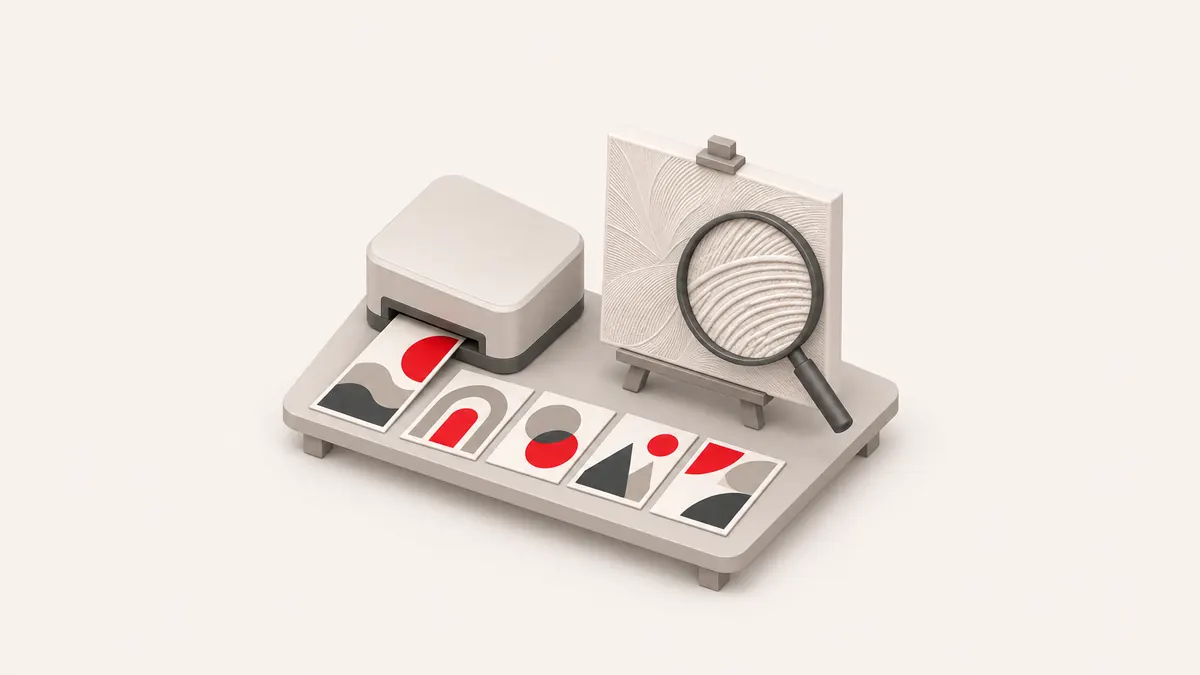
Kling AI, owned by Kuaishou, late on November 17 launched its next-generation image model, Kling Image 4.0, and opened an API aimed at enterprise customers and developers. It is the first time Kling's image model supports native 8K output. The release is separate from Kling 4.0, the video model announced on October 15; the two are different product lines.
The headline specs are about text and image sets
According to public reports, Image 4.0 uses a unified understanding-and-generation architecture that puts visual comprehension and image generation into a single model. The text input limit has been raised to 15,000 tokens, and one image can carry roughly 2,000 characters of typeset text. The model comes with more than 70 preset commercial fonts, and users can also upload a reference image so the model imitates its letterforms and layout.
For image sets, a single description can generate up to 10 images that share the same creative brief. Some review articles say a set can also take up to 10 reference images or subjects. There are also more than 110 preset tonal styles, and users can upload a reference image to extract its color and lighting.
The resolution tiers are as follows:
| Output type | Available resolutions | Default |
|---|---|---|
| Standard image | 2K / 4K / native 8K | 2K |
| Image set | 2K / 4K / native 8K | 2K |
| Long image | 1K / 2K | Not specified |
Taken together, these features point at commercial work such as e-commerce product pages, posters and matching sets of marketing materials. Chinese text has long been where image models stumble most: misplaced strokes, invented characters and long paragraphs whose layout falls apart. Handling 2,000 characters in one image, with more than 70 commercially usable fonts, is a direct answer to that pain point. The main use of 8K comes in post-production: after one image is generated, several regions can be cropped out and used on their own.
Pricing is still murky
Kling has not published a fixed consumption table for each resolution of Image 4.0. Under the current billing rules, both the reference images you input and the images you output are charged, and output cost rises with resolution; the exact deduction is whatever the generation page shows at the time. Kling's credits (known as inspiration points) are priced at 10 points per yuan, and the web version's Gold membership on a continuous monthly plan costs 58 yuan and grants 660 points a month.
That means the only way to learn what an 8K image costs for now is to generate one and check the charge. For enterprise customers paying per use through the API, that number will matter more to the decision than the spec sheet. As of the evening of the launch, Kling had not published an official per-image API price.
How it stacks up against similar models
The only third-party reference available comes from the anonymous blind-test arena run by Artificial Analysis. A review article relayed that Kling Image 4.0 ranks sixth globally and first among Chinese models on both the text-to-image and image-editing leaderboards, with OpenAI's GPT Image series taking all of the top five in text-to-image. The Kling image team separately said the new model gained more than 200 points over the previous generation, 3.0 Omni, on both boards. Arena rankings shift with vote counts, so the live leaderboard is the authority.
Looking across the field, competition among Chinese image models over the past two years has centered on Chinese text rendering and commercial licensing. By putting commercial fonts into its selling points, Kling is addressing designers' and e-commerce teams' worries about font copyright, and font infringement has long been a common source of disputes in e-commerce. The GPT Image series that leads the English-language leaderboard has generally been weak at laying out long Chinese paragraphs, which is also where domestic models can most easily open a gap.
On the video side, Kling 4.0, released in October, can generate 30 seconds in a single clip. With 8K now added on the image side, both product lines are moving toward specifications where output is ready for delivery. The design platform Lovart integrated the new model on the day of launch.
Sources: ITHome, Smzdm, CocoLoop, Sina Finance; resolution tiers and credit pricing were checked against figures from media hands-on tests, and leaderboard rankings are relayed from the Artificial Analysis image arena.